Home / Journal / Proprietary Blends
The Case Against Proprietary Blends
Contents
The mechanism, plainly stated
A proprietary blend lists a group of ingredients with a single combined weight — say, "1,200mg Focus Complex" — without breaking out how much of that total belongs to each individual ingredient. You know what's in it. You don't know how much of any single thing is in it, which is the number that actually determines whether a dose is meaningful.
The incentive problem
This matters because it creates room for a specific kind of manipulation: pairing a well-researched, expensive ingredient at a token amount with cheap filler ingredients that bulk out the total weight. The label looks impressive. The actual dose of the ingredient doing the work can be a fraction of what any study behind the marketing claim actually used.
What full disclosure actually buys you
A fully disclosed panel — every ingredient individually dosed — removes that ambiguity entirely. You, or your doctor, can look at the actual amount of any given ingredient and make an informed judgment about whether it's a meaningful dose. That's not a marketing claim; it's a structural difference in what information you have access to.
The standard we hold ourselves to
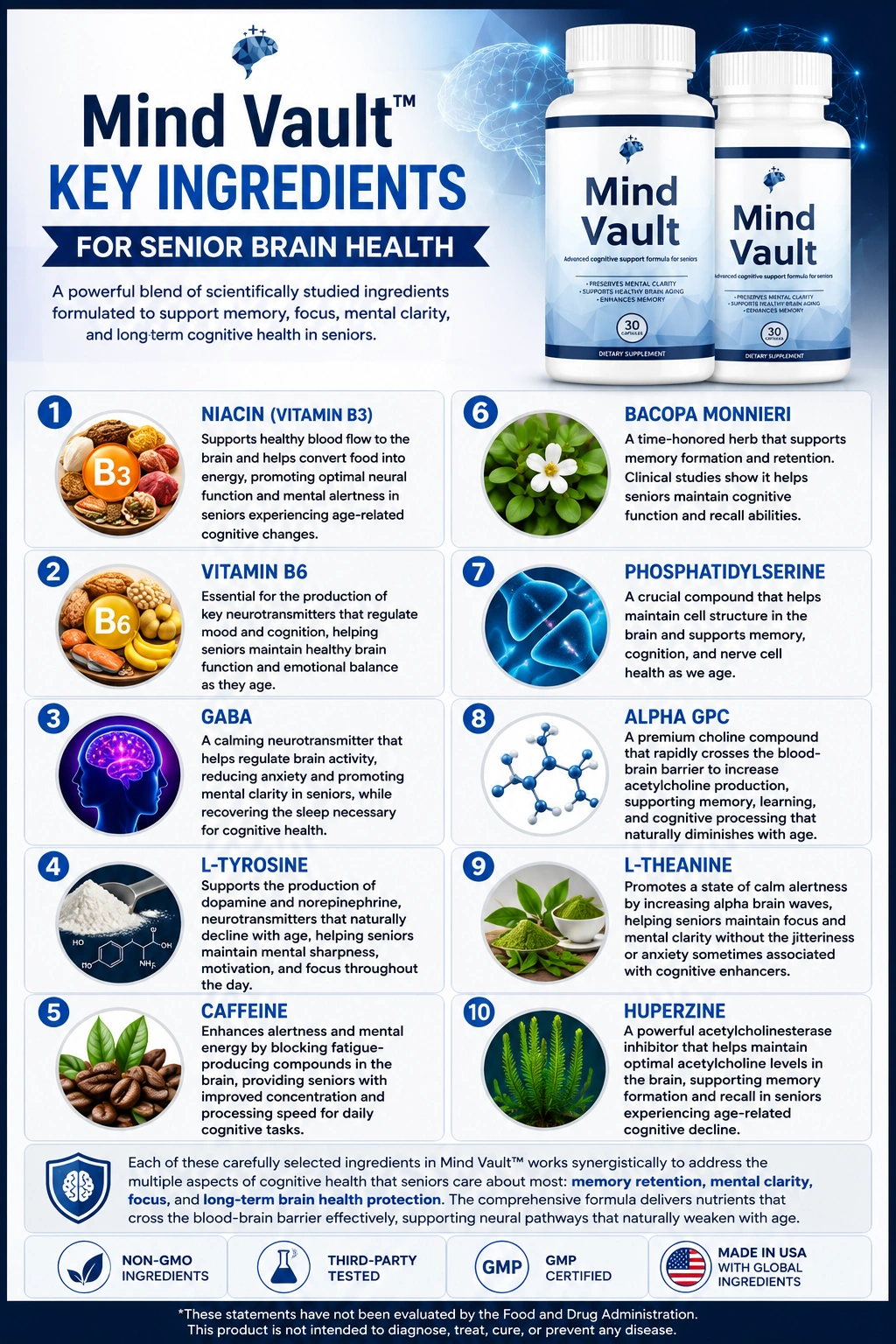
Mind Vault's Supplement Facts panel lists all ten ingredients individually, with no combined totals anywhere on the label. We think that should be the baseline standard for the category, not a differentiator — but until it is, it's worth checking for on any product you're considering.